Overview
LifeFone has been in the medical alert business since 1976, making it one of the longest-running providers in the industry. What keeps LifeFone relevant nearly five decades later is not flashy technology or trendy smartwatches — it is value. LifeFone consistently delivers more features per dollar than almost any competitor, including a standout benefit that no other major provider matches: free spouse coverage on every plan.
After testing LifeFone's full lineup, we rate it 4.3 out of 5. It loses points on response speed and device design compared to Bay Alarm Medical and Medical Guardian, but wins on pure value — especially for couples and families who want fall detection without paying an add-on fee.
Equipment Lineup
LifeFone keeps its equipment straightforward with four plan tiers, each building on the last.
At-Home Landline — $24.95/month
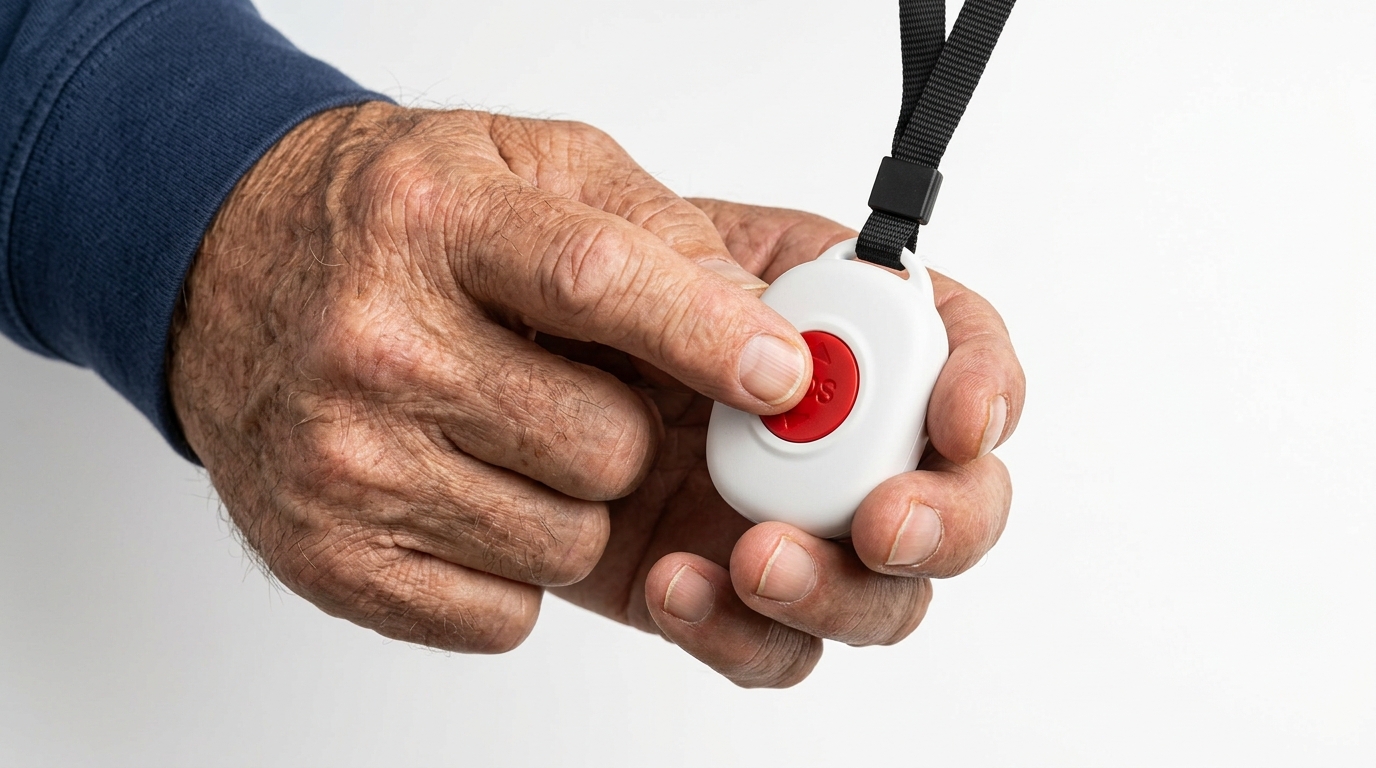
The most affordable plan connects through your existing landline. It includes a base station with two-way voice and a waterproof help button worn as a pendant or wristband. The range extends up to 1,300 feet from the base station, which is slightly better than most competitors. If you or your parent still has a landline and primarily stays home, this is the least expensive quality monitoring available.
At-Home Cellular — $29.95/month
Same as the landline plan but connects over the cellular network. No landline or internet required. This is the better choice for most families since landlines are increasingly rare, and the cellular connection provides a more reliable backup.
At-Home & On-the-Go — $39.95/month
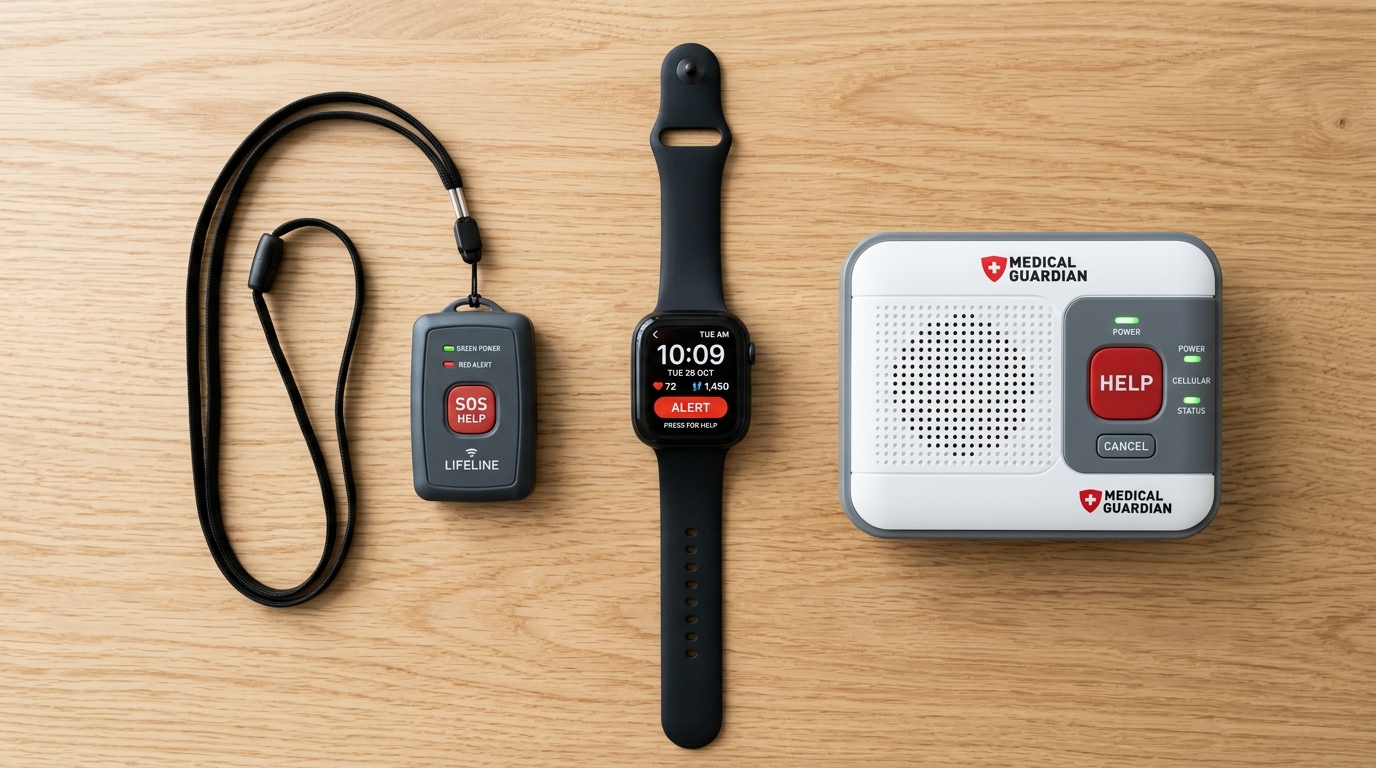
This is LifeFone's flagship plan and the one we recommend for most families. It combines the in-home base station with a portable GPS device that works anywhere in the US. The GPS unit is compact enough for a pocket or purse and includes two-way voice, location tracking, and — critically — automatic fall detection at no extra charge.
The inclusion of fall detection in the base price is a significant differentiator. Bay Alarm Medical, Medical Guardian, and MobileHelp all charge $10 per month extra for fall detection. At LifeFone, you get home coverage, mobile coverage, and fall detection all for $39.95. That is genuine value.
At-Home & On-the-Go VIP — $49.95/month
The VIP plan includes everything in the standard At-Home & On-the-Go plan plus a daily check-in service. Each day, a LifeFone operator calls to check on the wearer. If the call goes unanswered after a set number of attempts, emergency contacts are notified.
For seniors who live alone and have limited daily contact with family or friends, the check-in call provides an extra layer of reassurance. It is not for everyone, but for the right situation it is worth the $10 premium.
Spouse Coverage
This is LifeFone's strongest competitive advantage. Every plan includes free coverage for a spouse or partner living in the same household. Both people receive their own help button and both are covered by the same monitoring service at no additional cost.
With Bay Alarm Medical or Medical Guardian, covering a second person means paying for a second system — effectively doubling the monthly cost. With LifeFone, two people are protected for the price of one. For a couple on the At-Home & On-the-Go plan at $39.95 per month, that works out to less than $20 per person.
For couples where both partners have health concerns or fall risks, this single feature makes LifeFone the clear value winner.
Fall Detection
LifeFone includes automatic fall detection at no extra charge on the At-Home & On-the-Go plan and the VIP plan. On the At-Home Landline and At-Home Cellular plans, fall detection is available as a $5 per month add-on — still cheaper than the $10 per month charged by most competitors.
The fall detection hardware uses a combination of accelerometers and barometric sensors, similar to Bay Alarm Medical and Medical Guardian. In our testing, detection accuracy was comparable to other systems — reliable for hard falls from standing but less consistent with slow slides or falls from seated positions.
When a fall is detected, the device automatically contacts the monitoring center. An operator connects through two-way voice, and if the wearer cannot respond, emergency services are dispatched to the GPS location.

Response Time
This is where LifeFone trails the competition. The average response time is 35 to 40 seconds from button press to a live operator. That is within the acceptable range and faster than many budget providers, but it does not match Bay Alarm Medical's 31-second average or Medical Guardian's 25-to-35-second range.
The monitoring center is UL-listed and staffed 24/7 with US-based operators. The response quality — how the operator handles the call — is professional and thorough. The slight delay in connection speed has not been a deal-breaker in our testing, but families who prioritize the absolute fastest response time should consider Bay Alarm Medical.
Caregiver Features
LifeFone provides a caregiver portal that allows family members to manage emergency contacts, view alert history, and check device status. The portal is functional and easy to use, but it does not offer real-time GPS tracking or geofencing like Medical Guardian's MyGuardian app.
LifeFone also offers an activity assurance feature that sends notifications to caregivers if the help button has not been pressed or the base station has not detected activity within a specified window. This is a thoughtful touch for long-distance caregivers who want basic daily reassurance without the complexity of a full GPS tracking app.
Pricing and Value
LifeFone's pricing structure is among the most competitive in the industry:
- At-Home Landline: $24.95/month
- At-Home Cellular: $29.95/month
- At-Home & On-the-Go: $39.95/month (fall detection included)
- VIP with Daily Check-In: $49.95/month (fall detection included)
- Fall Detection Add-on (lower plans): $5/month
- Spouse Coverage: Free on all plans
No long-term contract. Month-to-month billing with a 30-day money-back guarantee. Quarterly and annual prepayment discounts are available, with annual billing offering the best per-month rate.
When you factor in spouse coverage and included fall detection, LifeFone frequently comes out cheaper than competitors who advertise lower base prices. Two people with fall detection at Bay Alarm Medical would cost roughly $90 per month. At LifeFone, the same coverage is $39.95.
Who LifeFone Is Best For
LifeFone is our top recommendation for couples who both need medical alert coverage and want to share one plan, budget-conscious families who want fall detection included without an add-on fee, seniors who live alone and would benefit from daily check-in calls, and families who want reliable monitoring without paying for premium features they may not use.
LifeFone may not be the best choice if you want the fastest possible response time, a smartwatch-style device, or the most advanced caregiver app. For those priorities, Bay Alarm Medical and Medical Guardian are stronger options.

The Bottom Line
LifeFone does not have the fastest response time, the sleekest hardware, or the most feature-rich caregiver app. What it does have is the best value proposition in the medical alert industry. Free spouse coverage, fall detection included on the most popular plan, daily check-in calls on the VIP tier, and plans starting under $25 per month — all without a contract.
For couples especially, LifeFone is in a class by itself. We rate it 4.3 out of 5 — a strong choice for value-focused families.