
What You Will Actually Pay
Medical alert system pricing is more straightforward than most people expect. Unlike cell phones or cable TV, there are no complicated bundles, no introductory rates that jump after six months, and no equipment installment plans. You pay a monthly monitoring fee, and the equipment is typically included.
Here is what you need to know about what things cost in 2026.
Monthly Monitoring Costs
Monthly monitoring is the primary cost and covers 24/7 access to a professional monitoring center with trained operators.
In-Home Systems ($19.95–$29.95/month)
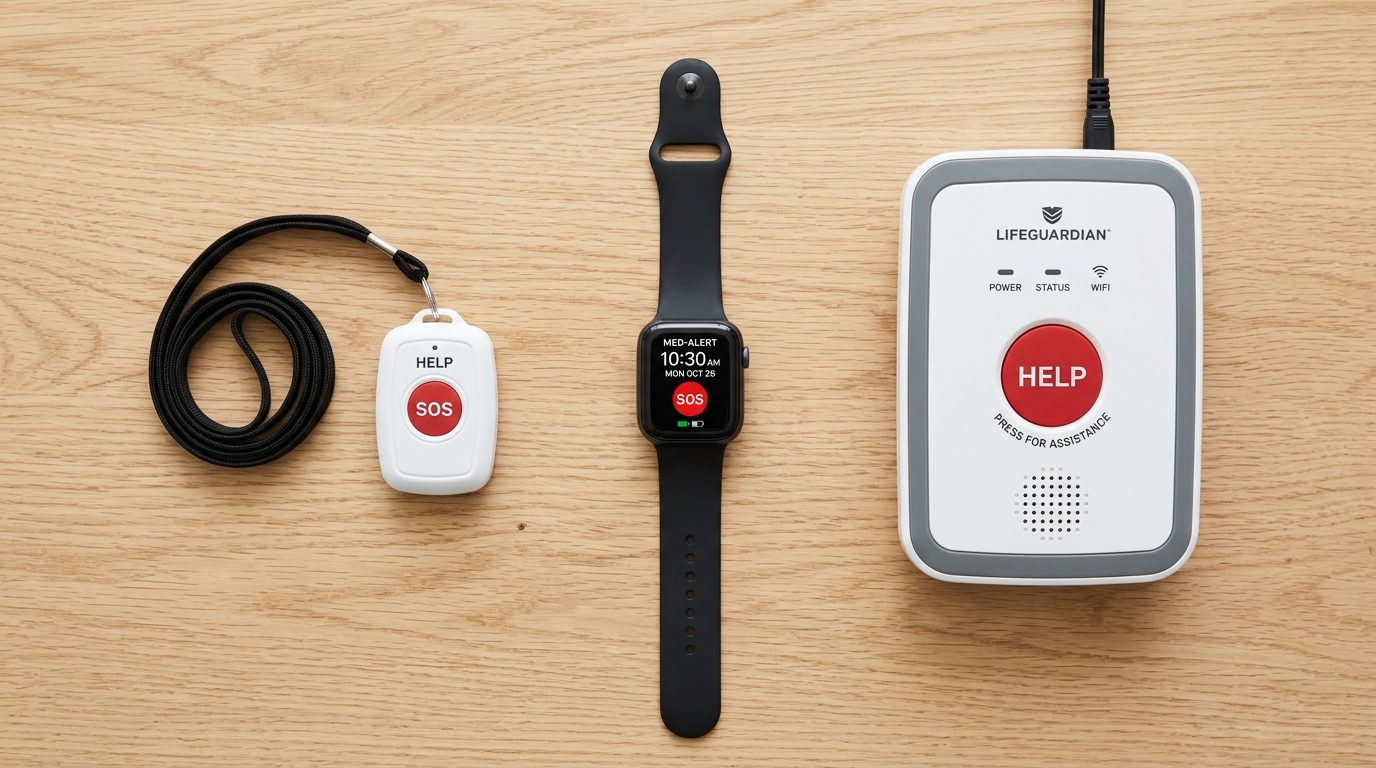
In-home systems include a base station and a wearable help button. They protect the wearer within the home and immediate surrounding area.
| System | Monthly Cost | Connection | Response Time | |---|---|---|---| | MobileHelp Classic | $19.95 | Cellular | ~35 sec | | LifeFone At-Home Landline | $24.95 | Landline | ~35-40 sec | | MobileHelp Wired Home | $24.95 | Landline | ~35 sec | | Bay Alarm Medical SOS Home | $27.95 | Cellular | 31 sec | | LifeFone At-Home Cellular | $29.95 | Cellular | ~35-40 sec |
Mobile GPS Systems ($34.95–$46.95/month)
Mobile systems include a portable GPS device that works anywhere in the US. Some also include a home base station.
| System | Monthly Cost | Battery Life | Key Feature | |---|---|---|---| | Bay Alarm SOS Micro | $34.95 | 1-2 days | Fastest response (31 sec) | | MobileHelp Solo | $34.95 | ~3 days | Mobile only, lightweight | | Bay Alarm SOS Smartwatch | $39.95 | 1-2 days | Looks like normal watch | | LifeFone At-Home & On-the-Go | $39.95 | ~2 days | Fall detection included | | MobileHelp Smart | $41.95 | 5 days | Longest battery life | | Medical Guardian Active | $46.95 | 1-2 days | Best caregiver app |
Premium Plans ($49.95+/month)
| System | Monthly Cost | Key Feature | |---|---|---| | LifeFone VIP | $49.95 | Daily check-in calls + fall detection included | | Life Alert Basic | ~$49.95 | Brand name (3-year contract required) |
Add-On Costs
Fall Detection ($0–$10/month)
Automatic fall detection is the most common add-on. Most providers charge $10 per month, but there are exceptions.
- Free: LifeFone At-Home & On-the-Go plan ($39.95 total) and VIP plan ($49.95 total)
- $5/month: LifeFone on lower-tier plans
- $10/month: Bay Alarm Medical, Medical Guardian, MobileHelp
Over a year, the difference between $5 and $10 per month is $60. Over the typical duration someone uses a medical alert (often several years), that adds up. LifeFone's included fall detection is a genuine value advantage.
Spouse or Partner Coverage
Most companies require a second subscription for a second person. LifeFone is the exception — free spouse coverage on all plans. For couples, this single policy can save $25 to $50 per month.
| Provider | Second Person Cost | |---|---| | LifeFone | Free (same plan) | | Bay Alarm Medical | Separate plan required | | Medical Guardian | Separate plan required | | MobileHelp | Separate plan required |
Lock Box ($0–$5/month or one-time purchase)
A lock box attached to the front door holds a house key so emergency responders can enter without breaking down the door. Some providers offer this as an add-on; it can also be purchased independently for $20 to $40.
Equipment Costs
The vast majority of medical alert companies include equipment at no extra charge as part of the monthly subscription. When you cancel, you return the equipment.
Companies with no equipment fee: Bay Alarm Medical, Medical Guardian, MobileHelp, LifeFone
Exceptions: Lively charges approximately $79.99 upfront for the Wearable2 device. Some companies charge a one-time activation fee of $25 to $50 — avoid these if possible, as the best providers do not charge activation fees.
If you lose or damage the equipment, most companies charge a replacement fee. Bay Alarm Medical and Medical Guardian typically charge $50 to $150 for replacement devices. Keep the equipment in good condition and return it promptly when canceling.
Contract Terms
Contract length directly affects your total financial commitment. Here is how the major providers compare.
| Provider | Contract | Cancellation | Guarantee | |---|---|---|---| | Bay Alarm Medical | Month-to-month | Cancel anytime, no fee | 30 days money-back | | Medical Guardian | Month-to-month | Cancel anytime, no fee | 30 days money-back | | MobileHelp | Month-to-month | Cancel anytime, no fee | 30 days money-back | | LifeFone | Month-to-month | Cancel anytime, no fee | 30 days money-back | | Life Alert | 36 months | Written notice, potential fees | None published |
The difference is stark. Four of the five top providers let you cancel any time with no penalty. Life Alert locks you in for three years. At $49.95 per month over 36 months, that is approximately $1,800 committed before you start.

Prepayment Discounts
Most providers offer discounts for paying quarterly, semi-annually, or annually. Typical savings run 5 to 15 percent off the monthly rate. Annual prepayment offers the best per-month price.
For example, Bay Alarm Medical's SOS Home at $27.95 per month may be available at a lower effective monthly rate when paid annually. The trade-off is paying a larger sum upfront and committing for the year — though most month-to-month providers offer prorated refunds if you cancel mid-period.
If you are confident the system is right and your parent will use it long-term, annual prepayment is a simple way to save. If you are unsure, start month-to-month and switch to annual after the initial trial.
The Real Cost Per Day
Monthly fees can feel abstract. Here is what each system actually costs per day.
| System | Monthly | Per Day | |---|---|---| | MobileHelp Classic | $19.95 | $0.66 | | LifeFone At-Home Landline | $24.95 | $0.83 | | Bay Alarm SOS Home | $27.95 | $0.93 | | Bay Alarm SOS Smartwatch | $39.95 | $1.33 | | MobileHelp Smart | $41.95 | $1.40 | | Medical Guardian Active | $46.95 | $1.57 |
Every system on this list costs less than a cup of coffee per day. To put that in perspective: a single ambulance ride averages $1,200 or more. A hip fracture hospital stay averages over $30,000. An emergency department visit averages $2,200. A medical alert system is one of the most cost-effective health investments a senior can make.
How to Spot Overpriced Systems
If a medical alert system costs more than $50 per month for basic monitoring, requires a contract longer than month-to-month, charges an activation or setup fee, does not include equipment in the monthly price, or will not publish pricing on its website, treat it with skepticism. The best providers in 2026 offer quality monitoring between $20 and $47 per month with no hidden costs, no contract, and equipment included.
Our Value Recommendations
Tightest budget: MobileHelp Classic at $19.95/month — professionally monitored in-home protection for less than $0.66/day.
Best balance of price and performance: Bay Alarm Medical SOS Home at $27.95/month — fastest response time, no contract, under a dollar a day.
Best value for couples: LifeFone At-Home & On-the-Go at $39.95/month — home + mobile + fall detection + free spouse coverage.
Best mobile value: MobileHelp Smart at $41.95/month — home + mobile, five-day battery, nationwide GPS.
The Bottom Line
A quality medical alert system costs between $20 and $50 per month. Equipment is included. Contracts should not exist. Fall detection adds $0 to $10 per month. There are no legitimate reasons to pay more than $50 per month for medical alert monitoring in 2026.
The most important pricing advice is this: do not let cost be the reason you delay getting a medical alert for someone you love. At under a dollar a day for the most affordable systems, the financial barrier is lower than almost any other health investment. The cost of not having one, measured in emergency room visits, extended hospital stays, or worse, is incomparably higher.