Understanding the Dad Problem
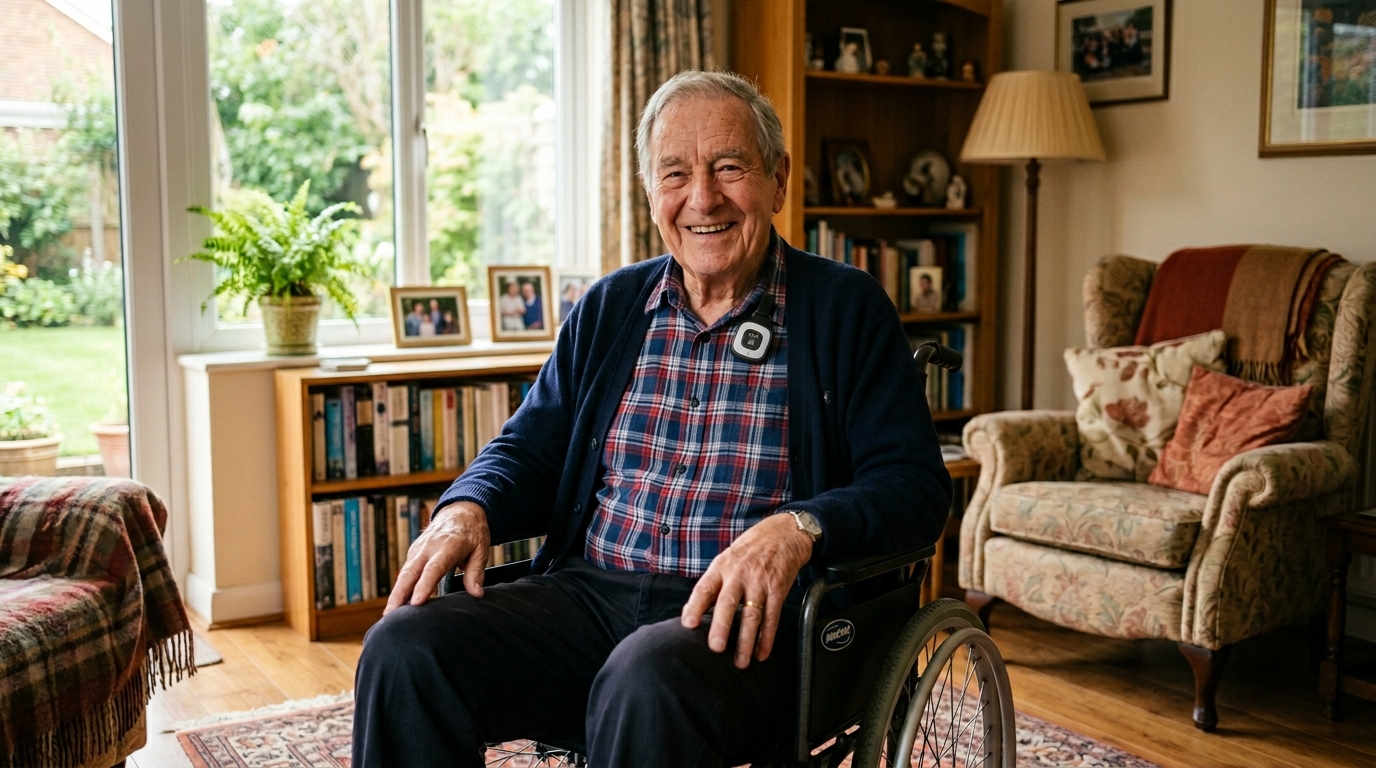
Buying a medical alert system for your dad is a different challenge than buying one for your mom. Not because the technology is different, but because the conversation is different.
Dads — especially dads of a certain generation — tend to resist the idea more forcefully. It is not vanity or stubbornness in the way we usually mean those words. For many men who spent decades as the protector and provider, accepting a safety device feels like admitting they can no longer take care of themselves or their family. The resistance is about identity, not inconvenience.
I know this because I have been there. My father resisted a medical alert for two years. He finally agreed to wear one after a neighbor found him sitting on the garage floor with a wrenched knee, unable to stand. He had been there for three hours. He did not call anyone because he kept thinking he could get up on his own.
If that story sounds familiar, you are not alone. Here are the systems that work best for dads, followed by advice on getting past the resistance.
Our Top 3 Picks for Dad
1. Bay Alarm Medical SOS Smartwatch — Best for Dads Who Will Not Wear a Pendant
$39.95/month | Add fall detection for $10/mo
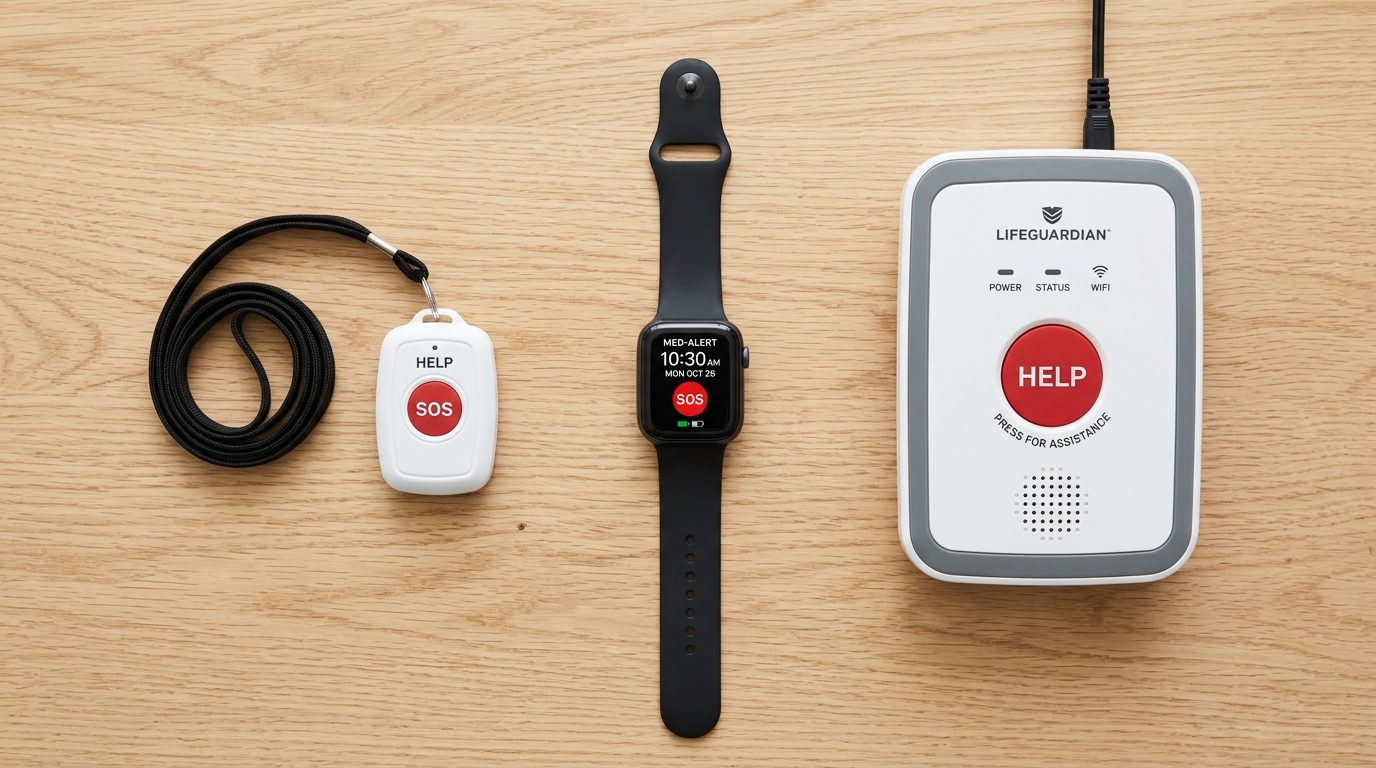
Most dads will flatly refuse to wear a pendant. It feels too medical, too visible, too much like a concession. The SOS Smartwatch removes that objection entirely. It looks and functions like a regular fitness watch — tells time, counts steps, monitors heart rate. The SOS button on the side connects directly to Bay Alarm Medical's monitoring center with GPS location.
Your dad does not need to own a smartphone. The watch works independently over the cellular network. He charges it on the magnetic cradle at night, puts it on in the morning, and goes about his day. Nobody at the hardware store or the golf course will know it is anything other than a regular watch.
Bay Alarm Medical's 31-second response time is the fastest in the industry, and the watch's IP67 water resistance handles workshop conditions, yard work, rain, and hand washing without issue.
Best for: Dads who refuse to look like they need help but would wear a normal-looking watch.
2. MobileHelp Smart — Best for Active Dads
$41.95/month | Add fall detection for $10/mo
If your dad is the type who is always doing something — working in the garage, walking the dog, volunteering, running errands, tinkering in the yard — he needs a system that keeps up. The MobileHelp Smart provides home base station coverage plus a mobile GPS device with a five-day battery life.
That battery life is the key detail. Dads forget to charge things. They leave the charger in the other room, or they think they will get to it later, or they do not notice the battery is low because they are in the middle of fixing something. A device that lasts five days on one charge means protection even when charging is not top of mind.
The mobile unit is small enough to clip to a belt or toss in a pocket. It provides nationwide coverage through AT&T's cellular network with GPS tracking, so if he presses the button while walking the dog three blocks from home, the monitoring center knows exactly where he is.
Best for: Dads who are always on the move and may not remember to charge a device every day.
3. Bay Alarm Medical SOS Home — Best Budget Option for Dad
$27.95/month | Add fall detection for $10/mo (requires SOS Micro or Smartwatch)
If your dad spends most of his time at home — in the house, in the garage, in the yard — and you want straightforward protection without paying for GPS features he will not use, the SOS Home is the right call. Under $28 per month, 31-second response time, waterproof button he can wear on his wrist or around his neck, 1,000-foot range from the base station.
Setup is genuinely simple. Plug in the base station, press the button, it works. Your dad can set it up himself in under ten minutes, which matters — dads tend to resist things that feel like they need help to install.
The wristband option is worth mentioning specifically. Many dads who would refuse a pendant will wear a wristband that looks like a basic sport band. It sits under a shirt sleeve and nobody sees it.
Best for: Dads who stay home most of the time and want the simplest, most affordable protection.

Getting Dad to Actually Wear It
The device recommendations above are the easy part. The hard part is getting him to agree. Here is what works, based on our experience and feedback from thousands of families.
Appeal to His Independence
Do not say: "Dad, I'm worried you'll fall and nobody will be there."
Say: "Dad, this means you can keep living on your own and doing what you want. If anything ever happens, you handle it with one button press. No waiting for someone to find you."
Most dads will respond to framing that positions the device as a tool for maintaining independence rather than a sign of losing it.
Make It About the People Who Love Him
For many dads, the argument that works best is not about their safety — it is about their family's peace of mind. Try: "I know you don't think you need it. But I need it. I need to know that if something happens, you can get help. Will you do this for me?"
This approach works because it lets him be the protector again. He is not wearing the device because he is vulnerable. He is wearing it because his son or daughter asked him to.
Do Not Make It a Big Deal
The more ceremony you put around the conversation, the more resistance you will face. Do not sit him down for a serious talk. Hand him the watch casually and say "I got this for you, it's like a fitness tracker with an emergency button. Try it for a month." Downplaying the significance makes it easier to accept.
Let Him Set It Up Himself
Dads often resist things that feel imposed. If possible, let him unbox it and set it up on his own. Bay Alarm Medical and MobileHelp both ship devices that are essentially plug-and-play. Letting him take ownership of the setup makes it feel like his choice rather than his child's instruction.
Start With the 30-Day Trial
Every system we recommend offers a 30-day money-back guarantee. Lead with that. It is not a commitment — it is a trial. Once he wears it for a week and realizes how unobtrusive it is, the objections usually fade.
Special Considerations for Dads
Hearing loss. Many older men have some degree of hearing loss, often undiagnosed. Choose a system with amplified speakers. The Bay Alarm SOS Home base station has a particularly strong speaker, and the SOS Smartwatch vibrates on the wrist for alerts.
Workshop and outdoor use. If your dad works with power tools, does yard work, or spends time in the garage, water resistance and durability matter. The SOS Smartwatch's IP67 rating handles dust, sweat, and rain. The wristband pendant stays out of the way during physical work.
Driving. If your dad still drives, a mobile GPS system like MobileHelp Smart ensures he is covered away from home. If something happens at the grocery store parking lot or while visiting a friend, the monitoring center can locate him via GPS.
Living alone after losing a spouse. This is a particularly important scenario. Dads who recently lost a spouse may be living alone for the first time in decades. The daily check-in call available on LifeFone's VIP plan can provide a daily touchpoint for dads who are isolated.
The Bottom Line
The right medical alert for your dad is the one he will actually wear. For most dads, that means something that does not look medical and does not feel like a concession.
The Bay Alarm Medical SOS Smartwatch at $39.95 per month is our top recommendation. It looks like a regular watch, works without a smartphone, and has the fastest response time in the industry. For active dads, the MobileHelp Smart at $41.95 per month with its five-day battery is the best mobile option. For budget-minded dads who stay home, the Bay Alarm SOS Home at $27.95 per month is unbeatable on value.
Get the 30-day trial. Hand it to him casually. And once he has worn it for a week without thinking about it, you will both sleep better.