

Life Alert vs Medical Guardian: The Full Comparison
Life Alert is the most recognized name in medical alert systems. Medical Guardian is one of the highest-rated. But recognition and quality are not the same thing. When you compare the two systems side by side — pricing, features, contracts, equipment, and caregiver tools — the gap between them is significant, and it does not favor Life Alert.
Here is the honest comparison.
Pricing
| Feature | Life Alert | Medical Guardian | |---|---|---| | Starting Price | ~$49.95/mo (not published) | $38.95/mo (published) | | With Fall Detection | Not disclosed | +$10/mo | | With Add-Ons | Can exceed $70/mo | $46.95/mo max | | Contract | 36 months required | None (month-to-month) | | Money-Back Guarantee | None published | 30 days | | Pricing Transparency | Must call for quote | Published on website |
Winner: Medical Guardian. It is cheaper, transparent about pricing, and does not lock you into a contract. Life Alert's refusal to publish pricing and its 3-year contract requirement are the most significant red flags in its offering. For transparent pricing across all brands, see our medical alert cost guide.
The financial impact is substantial. Over three years — the length of Life Alert's mandatory contract — Medical Guardian's Active Guardian plan costs approximately $1,690 (at $46.95/month). Life Alert's basic plan costs approximately $1,800 (at $49.95/month), potentially more with add-ons. You pay more for Life Alert and get locked in. You pay less for Medical Guardian and can leave anytime.
Equipment
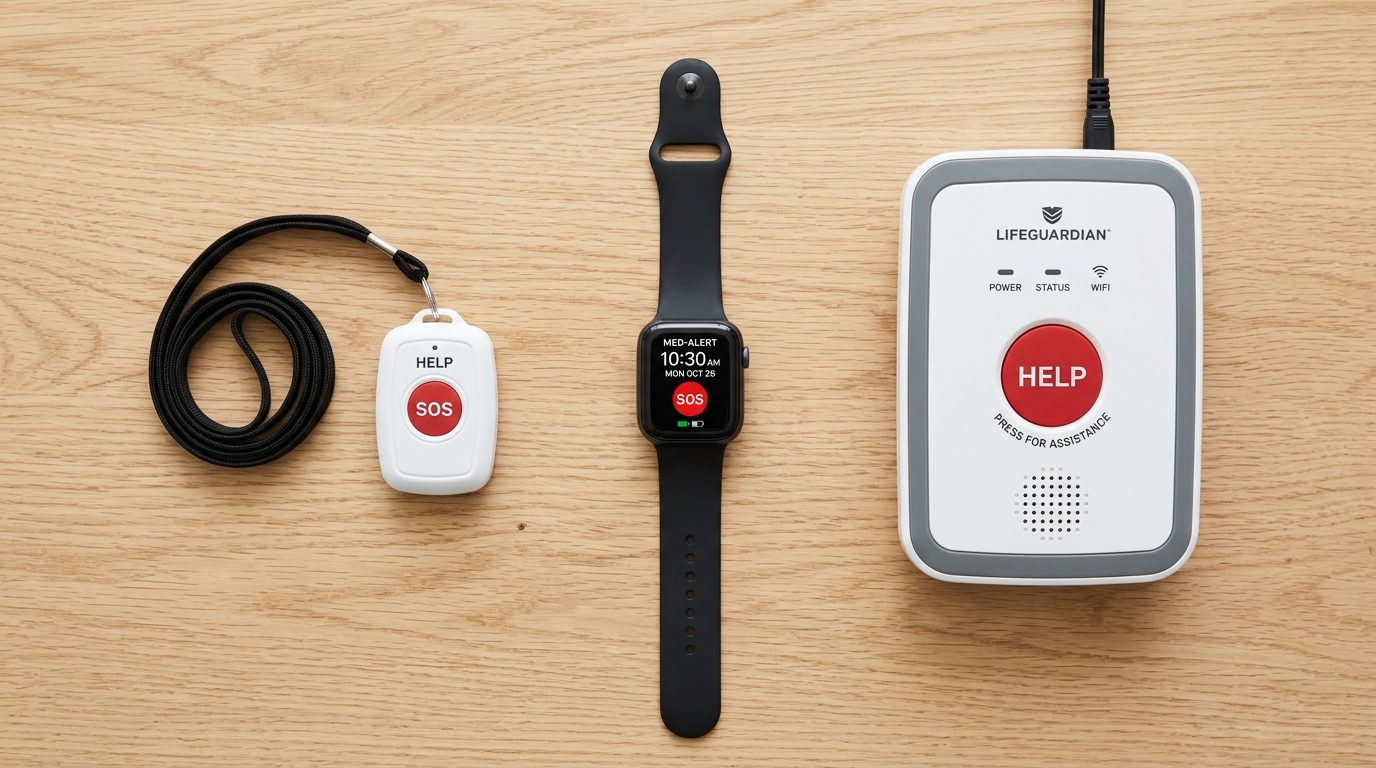
Life Alert offers a base station with a waterproof pendant, mobile GPS (as an add-on), and fire and CO monitoring (as add-ons). The equipment is functional but has not seen significant updates in recent years. There is no smartwatch option and no modern wearable design.
Medical Guardian offers four devices: the Classic Guardian (landline or cellular base station), the Home 2.0 (cellular with enhanced speaker), the Mini Guardian (compact GPS fob), and the Active Guardian (full-featured mobile GPS). The equipment is modern, well-designed, and covers every use case from home-only to fully mobile.
Winner: Medical Guardian. More device options, more modern equipment, and a broader range of solutions for different lifestyles.
Caregiver App
This is not even close. Medical Guardian's MyGuardian app, free on iOS and Android, offers real-time GPS location tracking, geofencing alerts, activity timeline, emergency push notifications, multi-caregiver support, and account management.
Life Alert does not offer a caregiver app. Families receive basic notifications about alerts but have no way to monitor location, activity, or device status from a smartphone.
Winner: Medical Guardian, decisively. For families managing a parent's care remotely, the MyGuardian app is a fundamental advantage.
Fall Detection
Medical Guardian offers fall detection on all four of its devices, including the best in-home medical alerts and mobile units. The add-on costs $10 per month. Device compatibility, pricing, and how it works are all clearly documented — and it earns a spot on our list of best fall detection systems.
Life Alert offers fall detection, but the company provides limited public information about which devices support it, what it costs, and how it integrates with the monitoring service. The lack of transparency makes it difficult to evaluate and compare.
Winner: Medical Guardian for transparency and device coverage.
Monitoring Quality
Both companies operate UL-listed monitoring centers with 24/7 staffing. Life Alert runs its own in-house center. Medical Guardian uses certified third-party centers.
Medical Guardian publishes a response time of 25 to 35 seconds. Life Alert does not publish a specific response time average.
Life Alert has one notable advantage: it offers integrated fire, carbon monoxide, and home intrusion monitoring in addition to medical alerts. Medical Guardian focuses exclusively on personal medical emergencies. If multi-threat home monitoring in a single system matters to you, Life Alert provides that.
Monitoring quality tie, with Life Alert winning on multi-threat coverage and Medical Guardian winning on transparency.

Contract and Cancellation
This is Life Alert's most significant weakness. The 36-month contract is the longest in the medical alert industry. Cancellation requires written notice and adherence to specific procedures. Customer complaints about cancellation difficulty are a recurring theme in reviews — read more about these issues in our guide to scams to avoid.
Medical Guardian offers month-to-month billing. Cancel anytime. No fee. Return equipment. Done.
Winner: Medical Guardian, by a wide margin.
The Verdict
Life Alert built the medical alert category and remains the most recognized brand. But in 2026, brand recognition is the only area where Life Alert leads Medical Guardian.
Medical Guardian is less expensive, more transparent about pricing, offers better equipment, has the industry's best caregiver app, provides fall detection on more devices, and does not require a contract. The only meaningful advantage Life Alert holds is integrated fire and CO monitoring.
For most families, Medical Guardian is the better choice. You get more features, more flexibility, and a lower price — making it an especially strong option for mom or any loved one you want to protect without overspending. If fire and CO monitoring are important, consider adding a standalone smoke and CO detector rather than paying Life Alert's premium for the integrated package.
And if budget is the primary concern, Bay Alarm Medical at $27.95 per month with no contract outperforms both Life Alert and Medical Guardian on pure value. Another strong alternative is LifeFone, which offers free spouse coverage and included fall detection on select plans.


