Why In-Home Systems Make Sense
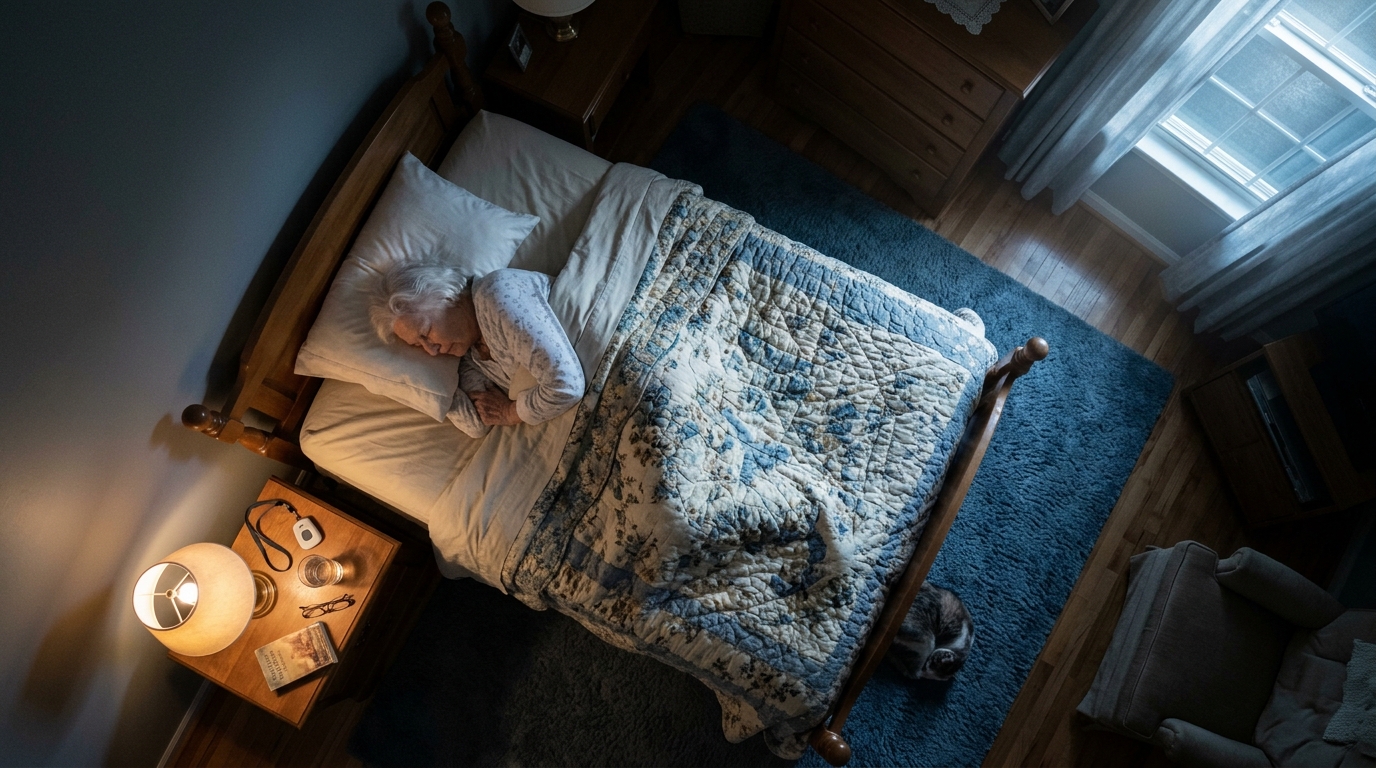
Not every senior needs GPS tracking and mobile coverage. If your loved one spends the vast majority of their time at home — in the house, in the garage, in the yard — an in-home medical alert system provides everything they need at a lower cost.
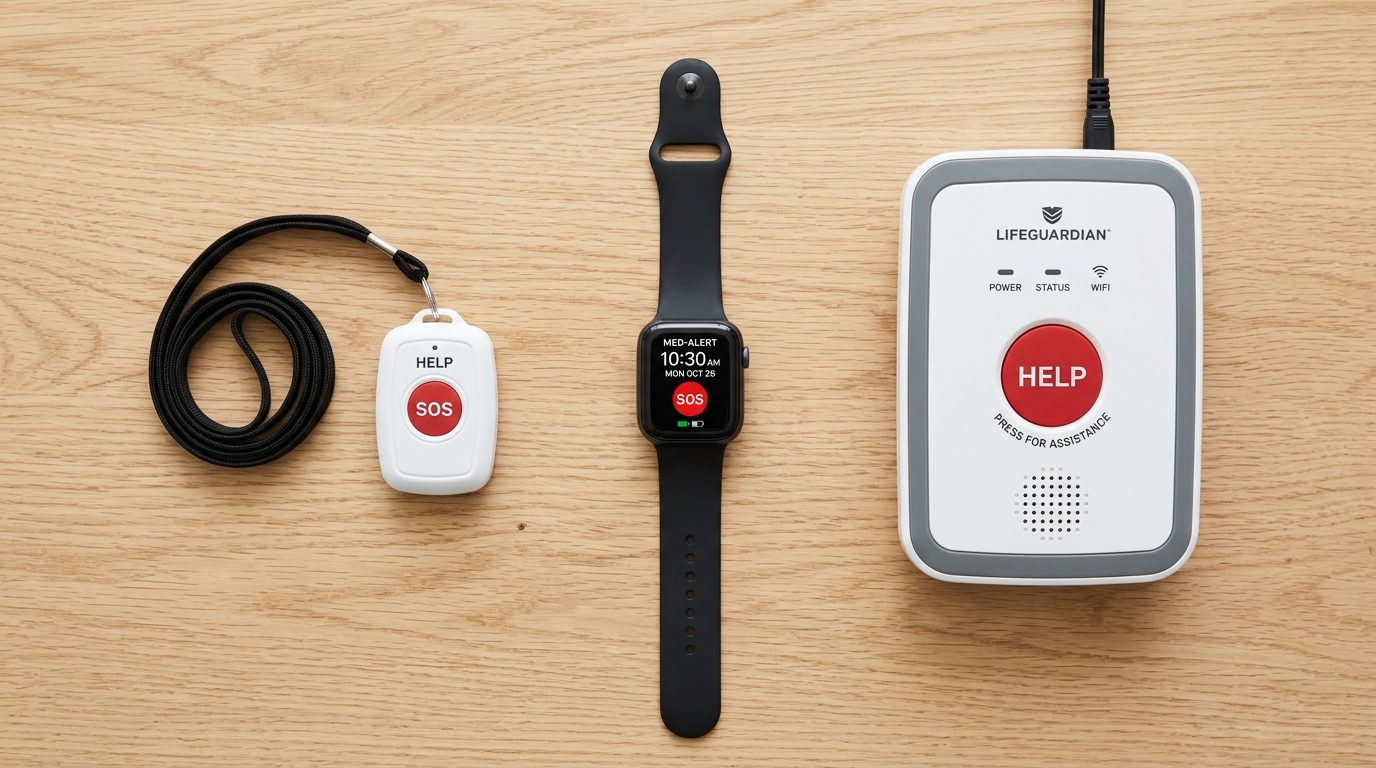
In-home systems are simpler. There is one base station, one help button, and one connection to the monitoring center. No mobile device to carry, no extra battery to charge, no GPS to track. The senior presses the button, talks through the base station, and help comes.
For seniors who primarily stay home, this simplicity is not a limitation — it is an advantage. Fewer components means fewer things that can go wrong, fewer things to charge, and fewer things to remember.
Our Top 4 In-Home Systems
1. Bay Alarm Medical SOS Home — Best Overall
$27.95/month | Range: ~1,000 feet
The SOS Home is our top pick for in-home protection because it combines the industry's fastest response time with a competitive price and reliable equipment.
The system includes a cellular base station (no landline required) and a waterproof help button that can be worn as a pendant or wristband. When the button is pressed, Bay Alarm Medical's monitoring center connects within an average of 31 seconds through two-way voice via the base station.
The 1,000-foot range covers most single-family homes including the yard, porch, driveway, and garage. The base station has a 32-hour backup battery for power outages, and the button's battery lasts approximately one year before replacement.
At $27.95 per month with no contract and a 30-day money-back guarantee, the SOS Home is the best value in home-only medical alerts.
2. MobileHelp Classic — Best Budget Option
$19.95/month | Range: ~600 feet
The MobileHelp Classic is the most affordable professionally monitored medical alert system in the industry. At $19.95 per month — less than $0.66 per day — it provides 24/7 monitoring with a cellular base station and waterproof help button.
The range is shorter at approximately 600 feet, which covers a standard home but may not reach into larger yards or detached garages. For apartments and smaller homes, 600 feet is more than sufficient.
Response time averages approximately 35 seconds. The monitoring center is UL-listed and staffed around the clock. The base station includes a backup battery.
For families where budget is the primary constraint, the MobileHelp Classic proves that quality medical alert monitoring does not have to be expensive.
3. LifeFone At-Home Cellular — Best for Couples
$29.95/month | Range: ~1,300 feet
LifeFone's At-Home Cellular plan offers in-home coverage with a cellular base station and waterproof pendant at $29.95 per month. The standout feature is free spouse coverage — both partners get their own button and are connected to the monitoring center at no additional cost.
The 1,300-foot range is among the longest available, making it suitable for larger homes and properties. Response time averages 35 to 40 seconds.
For a couple where both partners need home monitoring, LifeFone at $29.95 per month for two people is half the cost of two separate systems from any other provider.
4. MobileHelp Wired Home — Best Range
$24.95/month | Range: ~1,400 feet
The MobileHelp Wired Home connects through a standard phone jack (landline required) and offers the longest range of any in-home system at approximately 1,400 feet. For seniors in larger homes, ranch properties, or those who spend significant time in detached workshops or garages, the extended range ensures coverage where shorter-range systems would lose the signal.
At $24.95 per month, it is priced between the budget Classic and premium competitors. The landline requirement is the main limitation — if your parent does not have a landline, this system is not an option.
Key Comparison
| Feature | Bay Alarm SOS Home | MobileHelp Classic | LifeFone Cellular | MobileHelp Wired | |---|---|---|---|---| | Monthly Cost | $27.95 | $19.95 | $29.95 | $24.95 | | Range | ~1,000 ft | ~600 ft | ~1,300 ft | ~1,400 ft | | Connection | Cellular | Cellular | Cellular | Landline | | Response Time | 31 sec | ~35 sec | ~35-40 sec | ~35 sec | | Backup Battery | 32 hours | ~30 hours | ~30 hours | ~30 hours | | Spouse Coverage | No | No | Free | No | | Contract | None | None | None | None |
What to Look for in an In-Home System
Range. The base station's range determines how far from the unit the help button will work. Measure the distance from where the base station will sit to the farthest point your loved one regularly goes — the back yard, the garage, the mailbox. Choose a system with range to spare.
Connection type. Cellular systems are the standard and require no existing phone service. Landline systems are slightly cheaper but require an active landline, which many seniors no longer have.
Waterproof button. The bathroom is the most common fall location. A waterproof button that can be worn in the shower is essential, not optional. All four systems above include waterproof buttons.
Backup battery. Power outages happen. A base station with a 24-to-32-hour backup battery keeps the system operational when the lights go out.
Audio quality. The base station is the communication link between the wearer and the monitoring center. Strong, clear audio — both the speaker and the microphone — matters, especially for seniors with hearing difficulties. The Bay Alarm SOS Home has a particularly robust speaker.
When to Upgrade to Mobile
An in-home system is sufficient as long as your loved one stays within range of the base station for the vast majority of their day. Consider upgrading to a mobile GPS system if they start driving or traveling regularly, they walk or exercise away from home, they visit friends, attend social activities, or run errands independently, or their cognitive health changes and wandering becomes a concern.
The transition is simple — cancel the home-only plan (no cancellation fee) and start a mobile or combination plan with the same or different provider.
The Bottom Line
In-home medical alert systems provide essential 24/7 protection for seniors who stay home at the most affordable price points in the industry. No GPS complexity, no extra devices to manage, no premium pricing.
Bay Alarm Medical SOS Home ($27.95/month) is the best overall for its unmatched 31-second response time. MobileHelp Classic ($19.95/month) is the best budget option at less than $0.66 per day. LifeFone At-Home Cellular ($29.95/month) is the best for couples with free spouse coverage. MobileHelp Wired Home ($24.95/month) is the best for large homes with the longest range.
If your parent stays home, an in-home system is all they need. Save the money and put it toward fall detection instead.